
How To Tell If A Diamond Is Real
Determining if a diamond is real can be challenging. Many people are unsure about the authenticity of their diamonds. This guide will help you identify real diamonds. You will learn various methods to test diamond authenticity.
Some tests can be done at home with simple tools. Others may require professional evaluation for accuracy.
Real diamonds have unique properties that set them apart. These include thermal conductivity and light refraction.
Understanding these properties can help you spot a fake. You will also learn about common diamond simulants.
Simulants like moissanite can easily be mistaken for real diamonds. Knowing the difference is crucial for buyers and owners.
We will explore both visual inspections and tool-based tests. This will give you a comprehensive understanding of diamond testing.
By the end, you will be equipped to make informed decisions about your diamond jewelry.
Why Diamond Authenticity Matters
Identifying real diamonds is essential for various reasons. Real diamonds hold significant financial value. Fake diamonds lack this intrinsic worth and can lead to financial loss.Moreover, authenticity influences emotional value. Diamonds are often symbolic gifts, representing love and commitment. Knowing your gemstone is authentic ensures its sentimental value remains intact.
Consider these key reasons why authenticity matters:
- Investment Value: Real diamonds are a solid investment.
- Symbolic Significance: They often represent important life events.
- Resale Potential: Authentic diamonds retain value over time.
By verifying the authenticity, you are also supporting sustainable and ethical practices in the jewelry industry. This not only protects your investment but also aligns with global ethical standards.
Natural vs. Synthetic vs. Simulant Diamonds
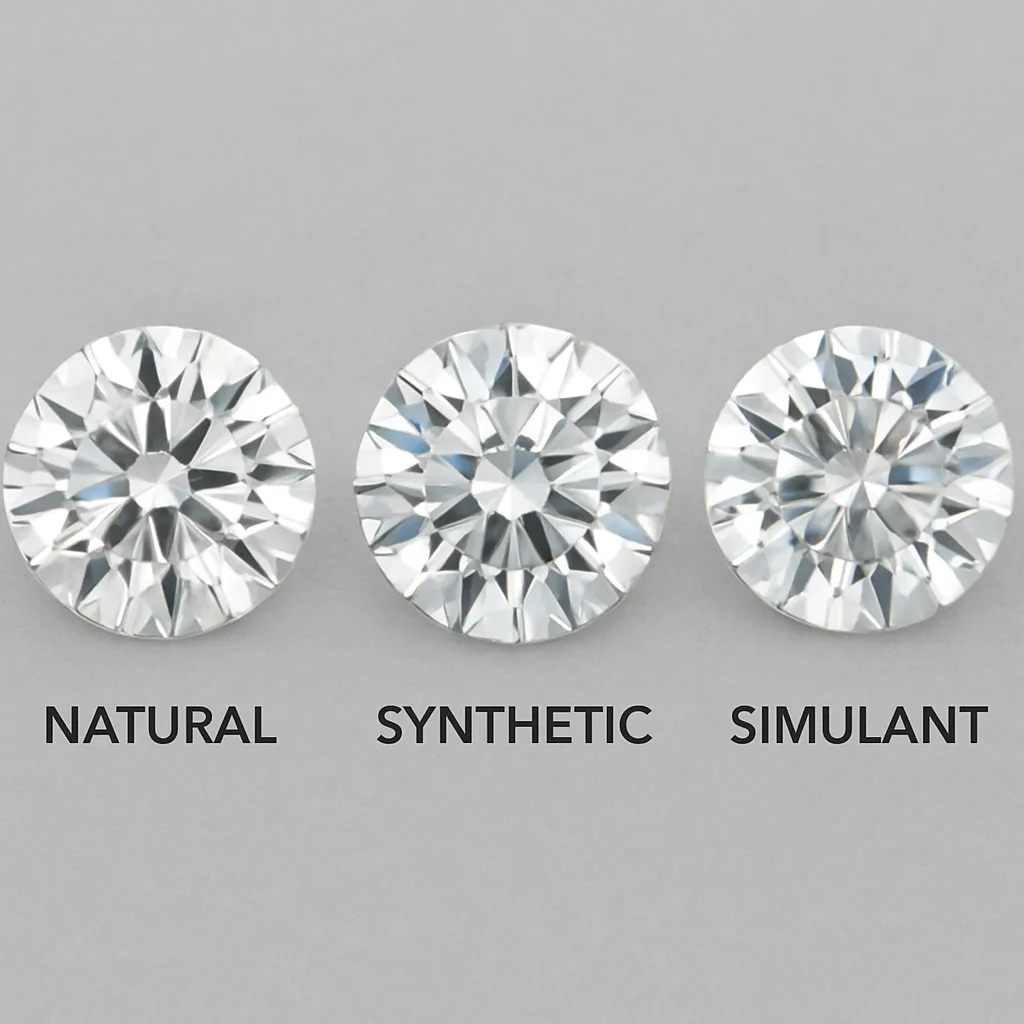
Understanding the differences among natural, synthetic, and simulant diamonds is crucial. Natural diamonds form over millions of years beneath the Earth's surface. They boast unique characteristics and historical significance.Synthetic diamonds, however, are created in laboratories. Though chemically identical, they lack the natural formation process. They offer a more affordable, yet real, diamond option.
Simulant diamonds differ as they mimic diamond appearance without sharing identical properties. These include stones like cubic zirconia and moissanite. While they offer beauty, they don't match a diamond's authentic sparkle.
Here’s a breakdown of key features:
Natural Diamonds: Formed naturally over time.
Synthetic Diamonds: Lab-created, sharing the same properties.
Simulants: Appear similar but differ in composition.
Each type serves different needs and budgets. Natural diamonds often carry greater intrinsic and emotional value. Synthetic diamonds provide a cost-effective and sustainable choice. Simulants are ideal for those seeking beauty on a budget. Knowing these distinctions helps in making informed purchasing decisions.
At-Home Tests: How To Tell If A Diamond Is Real At Home
Testing a diamond at home can be simple and insightful. Several easy tests can help you determine authenticity. You won't need expensive tools or equipment.One reliable method is observing thermal conductivity. Real diamonds disperse heat rapidly, unlike many fakes. The fog test can highlight this property.
Density also plays a role in diamond testing. The water test utilizes this by watching whether the diamond sinks. Real diamonds are denser and will sink when placed in water.
To assess optical properties, try the dot or newspaper test. Real diamonds' unique structure refracts light, altering how you view objects beneath them.
Consider visual changes under ultraviolet light. Many real diamonds fluoresce blue when exposed to UV light, aiding identification.
Despite ease, these tests have limitations. Inconsistent results can emerge if methods aren't performed correctly. They are best used in combination for reliability.
- Fog Test: Assesses thermal conductivity.
- Water Test: Checks density.
- Dot/Newspaper Test: Evaluates light refraction.
- UV Light Test: Examines fluorescence.
If doubt persists after at-home tests, consult a professional jeweler. They can provide thorough examinations with specialized equipment. Remember, while home tests offer insights, they aren't foolproof. For definitive results, expert evaluation is recommended.
The Water Test
The water test is straightforward yet effective. Fill a glass with water and gently drop the diamond into it. Observing whether it floats or sinks is key.Real diamonds have high density, causing them to sink. Simulants, often less dense, might float or sink slowly. Here's a simple checklist for the water test:
Sink: Indicates a real diamond.
Float: Likely a simulant.
Ensure you conduct the test carefully to avoid losing the stone. Although this test is helpful, using it alongside other methods yields more accurate results.
The Fog Test
The fog test is a popular choice for quick checks. Hold the diamond close to your mouth and breathe on it, creating fog. Observe how quickly it clears.Real diamonds dissipate heat quickly, causing fog to disappear almost immediately. Fakes will remain foggy for longer. Here’s what to look for:
Fast Clearing: Suggests a real diamond.
Lingering Fog: Indicates a possible fake.
Remember, ambient temperature can influence results. Conducting this test in varied environments might produce more reliable outcomes.
The Dot and Newspaper Tests
To perform the dot test, draw a small dot on white paper. Place the diamond over it and observe through the stone. Real diamonds refract light, making the dot appear distorted or invisible.The newspaper test involves placing the diamond over printed text. Real diamonds scatter light, causing the text to become unreadable. Here's a brief guide:
Dot Test: Dot appears distorted or missing.
Newspaper Test: Text is unreadable.
These tests highlight a diamond's unique light refraction. However, results can vary, so consider using additional methods for confirmation.
The UV Light Test
Under UV light, many real diamonds fluoresce a blue hue. This fluorescence can be a distinguishing characteristic. However, not all genuine diamonds exhibit this trait.To perform the test, simply expose the diamond to ultraviolet light. Note any color changes or brightness:
Blue Glow: Often indicates a real diamond.
No Glow: May still be real but requires further testing.
Fluorescence varies among diamonds, with some showing little to none. Use this test as part of a broader examination process for best results.
Visual Inspection: What To Look For
Visual inspection is a key step in determining diamond authenticity. It doesn't require special tools—just your eyes and attention. Observing certain features can give you important clues.Real diamonds display unique clarity and brilliance. Look for their sharp edges and well-defined facets. Fake stones often appear cloudy or have rounded edges.
A closer look might reveal natural inclusions, tiny imperfections within the diamond. These are common and can indicate authenticity. Fake diamonds often appear flawless, which can be a red flag.
Edges: Real diamonds are sharp.
Clarity: Look for natural inclusions.
Another aspect to examine is sparkle. Real diamonds have a distinct sparkle due to their high refractive index. They reflect a combination of white and rainbow light—known as brilliance and fire.
Brilliance: White light reflection.
Fire: Rainbow light reflection.
While visual checks offer valuable insights, they aren't definitive. For confirmation, consider combining them with other tests or consulting a jeweler. Observing these visual cues will bolster your ability to identify real diamonds effectively.
Using Tools: Magnifying Glass, Loupe, and Diamond Tester
To accurately determine if a diamond is real, using tools like a magnifying glass, loupe, and diamond tester is beneficial. These tools can unveil characteristics not visible to the naked eye.A magnifying glass or loupe allows you to examine the stone for inclusions and imperfections. These tiny marks often hint at a natural origin. A flawless appearance might suggest a fake.
Magnifying Glass/Loupe: Inspect for inclusions and clear-cut facets.
Diamond testers measure thermal conductivity. Real diamonds excel at dispersing heat, while many imitations do not. It's a simple, effective device for quick identification.
Diamond Tester: Confirms thermal properties.
However, it's important to know that testers can mistake moissanite, a common diamond simulant, as real due to similar thermal properties. They’re not foolproof for every imitation stone.
Combining these tools can provide comprehensive insights into a diamond's authenticity. While they offer useful information, results should be considered alongside other tests for a well-rounded conclusion. Seeking confirmation from a jeweler remains a wise step if uncertainties persist.
Professional Diamond Testing Methods
For reliable diamond authentication, consulting a professional jeweler is often the best course of action. Jewelers have access to advanced tools and techniques beyond at-home methods.One significant professional test is the thermal conductivity test, which evaluates how quickly a stone disperses heat. Another is the electrical conductivity test, valuable for distinguishing between diamonds and moissanite, which can often fool thermal testers.
- Thermal Conductivity Test: Measures heat dispersion.
- Electrical Conductivity Test: Differentiates diamonds from simulants.
- Microscopic Examination: Reveals detailed characteristics, such as internal flaws.
How To Tell If A Diamond Ring Is Real
Determining if a diamond ring is authentic involves examining both the diamond and its setting. The setting can often provide clues about the stone's authenticity. High-quality metals like platinum or gold usually accompany real diamonds.Start by checking for any engraved markings inside the band. These can include the karat number, metal type, or even branding from the jeweler, indicating a higher likelihood of a genuine diamond.
- Markings: Check for karat numbers or branding.
- Setting: High-quality settings accompany real diamonds.
- Wear and Tear: Look for signs of quality wear.
Common Myths and Unsafe Tests to Avoid
Many myths exist about testing diamond authenticity at home. However, certain tests are unreliable or can potentially harm the stone. It's crucial to steer clear of these methods to prevent damaging a genuine diamond.
The scratch test is one such myth. It suggests scratching glass with a diamond to check hardness, but this can harm both the diamond and the glass. Similarly, using acids or sandpaper are not advisable as they risk damaging the stone's surface.
- Scratch Test: Risk of damaging both diamond and glass.
- Acid Test: Unsafe and unnecessary.
- Sandpaper Test: Potential surface damage.
Certification and Documentation: The Ultimate Proof
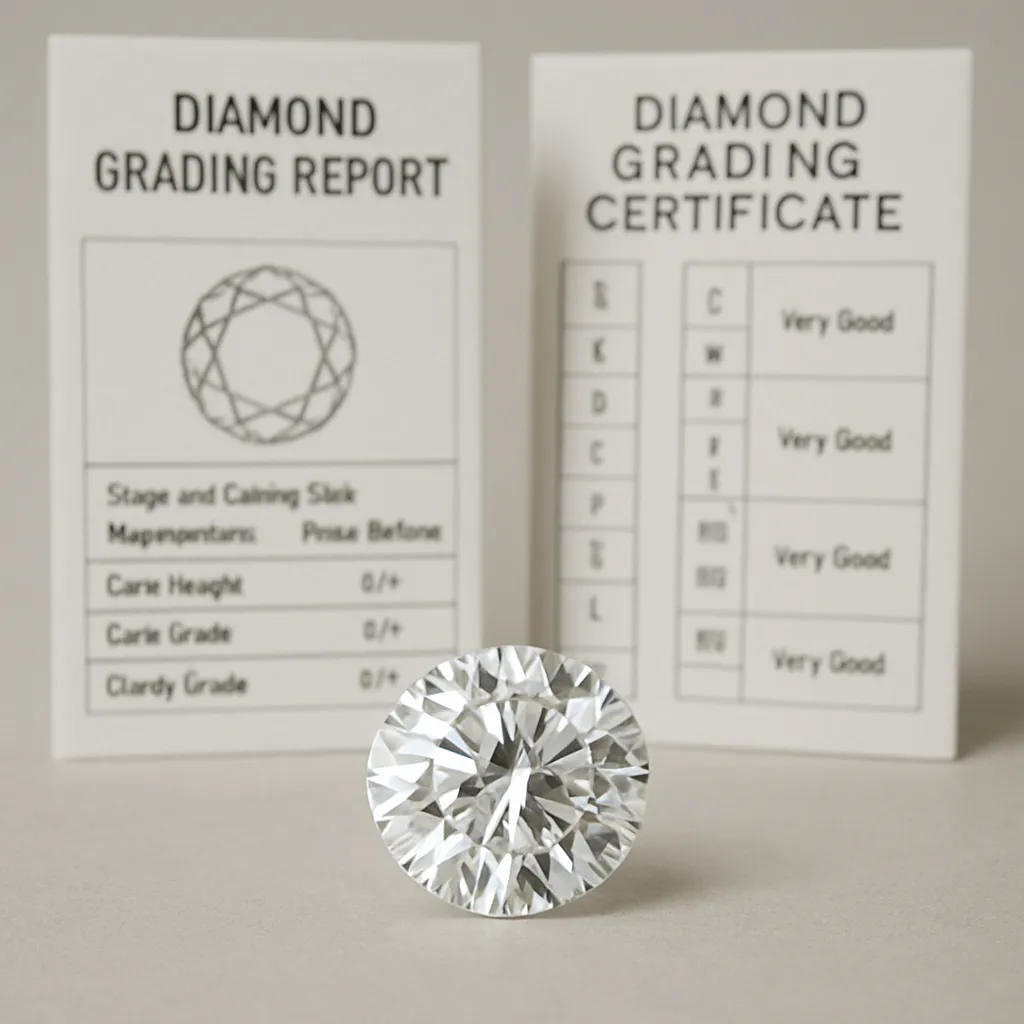
When it comes to confirming diamond authenticity, certification is crucial. Reputable gemological institutes provide these documents, which detail a diamond's characteristics and confirm its legitimacy. Always request this certification when purchasing a diamond.
Important certifications come from organizations like the Gemological Institute of America (GIA) and the American Gem Society (AGS). These documents include essential details such as cut, color, clarity, and carat weight.
- GIA Certification: Recognized worldwide.
- AGS Certification: Trusted for quality and accuracy.
- Documentation: Ensures authenticity and value.
When To Consult a Professional Jeweler
If you're ever in doubt about a diamond's authenticity, it's wise to consult a professional jeweler. They have the expertise and tools necessary for accurate verification.Professional jewelers can provide insights and perform tests you can't do at home. Their guidance ensures confidence in your diamond's authenticity and value.
Frequently Asked Questions About Diamond Authenticity
What is the most reliable at-home test for diamonds?
The thermal conductivity test is quite reliable. Real diamonds conduct heat effectively, unlike most fake stones. This can be tested using a diamond tester available for purchase online.
Do all real diamonds glow under UV light?
No, not all real diamonds fluoresce under UV light. Only some will show a blue glow, while others won't. Thus, the UV light test is not a definitive method for authenticity.
Can I trust a diamond's appearance alone?
While appearance can offer hints, it's not foolproof. Professional testing provides a more precise assessment of authenticity.
- Thermal Conductivity Test: Best at-home reliability
- UV Light Test: Inconsistent results
- Appearance: Not a guarantee
Conclusion: Making Informed Decisions About Your Diamond
Verifying a diamond's authenticity demands a mix of at-home tests and professional evaluation. While initial checks at home provide valuable hints, they aren't infallible.Consulting a jeweler ensures precision and confidence. Armed with knowledge, you can make informed choices about your diamond's true value and authenticity, safeguarding your investment and peace of mind.